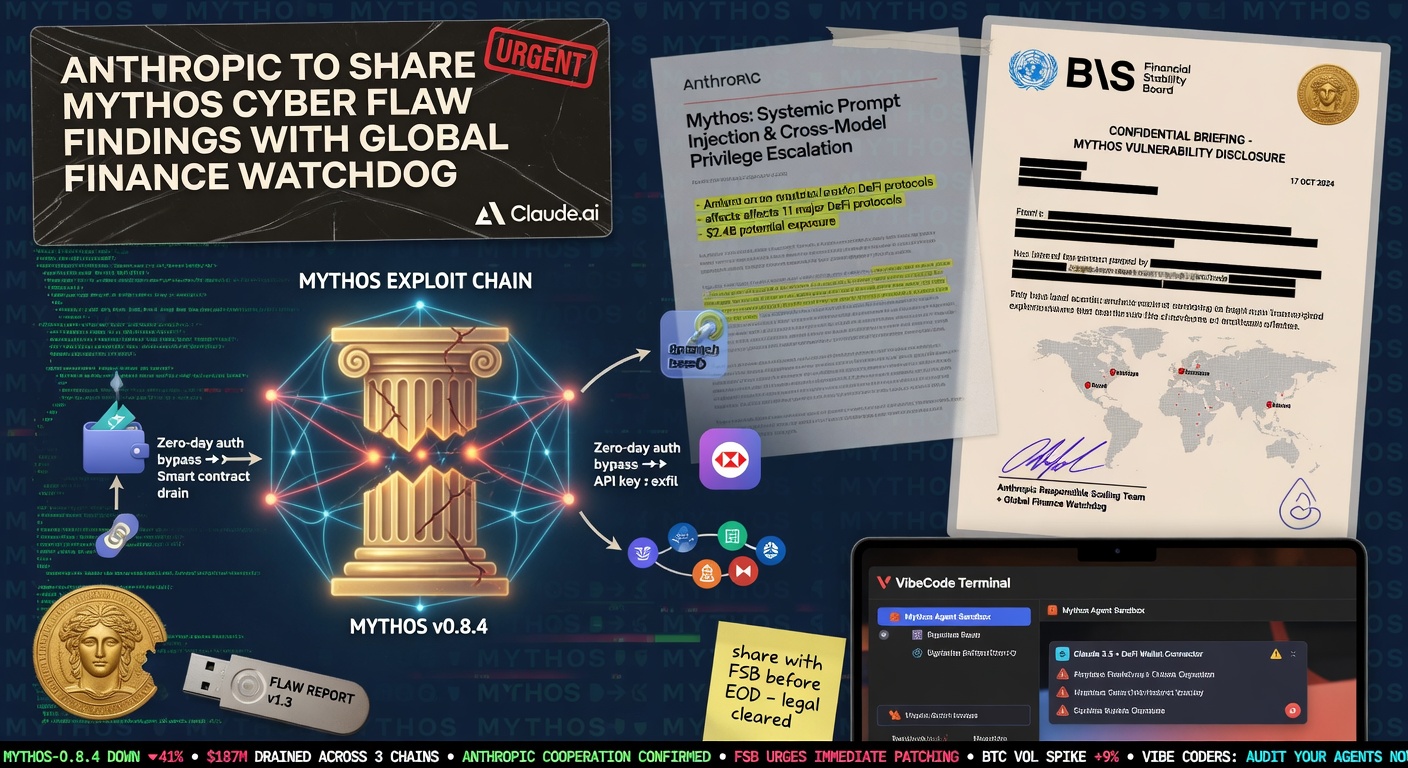
The move signals a shift in how AI companies handle security research. instead of burying findings in academic papers or selling them to the highest bidder, Anthropic is taking the regulatory route. The Mythos vulnerability, discovered in their security work, exposes a real gap in how financial institutions defend against AI-assisted attacks. By routing findings through global finance watchdogs like the Financial Stability Board or equivalent bodies, Anthropic is betting that transparency beats secrecy.
What makes this noteworthy: financial systems run on assumptions about threat models that predate large language models. A single actor with API access to Claude or similar systems can now generate sophisticated social engineering campaigns, craft malware variants faster than signature detection can catch them, or identify supply chain weaknesses in milliseconds. Traditional cybersecurity operates on the principle that attackers are resource-constrained. AI flips that. Mythos apparently reveals how that asymmetry plays out in institutional settings.
The regulatory play is pragmatic. Watchdogs like the FSB coordinate across central banks, treasuries, and compliance bodies. One disclosure to them reaches thousands of institutions simultaneously, instead of banking on each firm reading a GitHub advisory or Twitter thread. It also creates legal cover. If a bank gets hit by the exact attack pattern Anthropic warned about, regulators will ask whether they received the disclosure. That's enforcement teeth.
But here's the tension: sharing findings before defensive patches exist can accelerate exploitation. Anthropic presumably has timing controls and is working with affected parties on remediation windows. Still, the move assumes that institutional preparedness matters more than a few months of zero-day secrecy.
This sets precedent. Other AI labs will face pressure to do the same, especially if regulators start asking why they didn't. The cost of staying silent just got higher.
Key Signals
Claim
A single actor with API access to Claude or similar systems can generate sophisticated social engineering campaigns, craft malware variants faster than signature detection can catch them, or identify supply chain weaknesses in milliseconds.
Claim
Financial systems operate on threat model assumptions that predate large language models, creating a vulnerability gap when AI-assisted attacks emerge.
Claim
Sharing findings through the FSB and equivalent regulators reaches thousands of institutions simultaneously and creates legal enforcement mechanisms, making the cost of institutional silence higher.
Claim
Sharing security findings before defensive patches exist can accelerate exploitation, though Anthropic presumably has timing controls and remediation windows in place.
Direct Answer
Anthropic is sharing its Mythos cyber vulnerability findings with global finance watchdogs to coordinate defenses across financial institutions against emerging AI-enabled threats. This represents a shift from traditional security secrecy toward regulatory transparency.
FAQ
What is the Mythos vulnerability discovered by Anthropic?
Mythos is a cyber flaw that exposes how AI systems can be weaponized against financial institutions through sophisticated social engineering, malware generation, and supply chain identification. The exact technical details are under regulatory review.
Why is Anthropic disclosing to finance regulators instead of keeping findings secret?
Regulatory disclosure allows Anthropic to reach thousands of financial institutions simultaneously through coordinated watchdog bodies, creating enforcement accountability and reducing the risk that attacks go undetected due to institutional siloing.
Which global finance watchdogs are receiving the disclosure?
The disclosure is directed at international bodies such as the Financial Stability Board and equivalent regional regulatory authorities that coordinate across central banks and financial compliance teams.
How does this disclosure approach differ from traditional cybersecurity practice?
Traditional practice often delays public disclosure until patches are available and a small number of vendors are notified privately. Anthropic's approach routes findings to regulators first, creating institutional awareness before fixes may be ready.
 ViewDAO