 ViewDAO
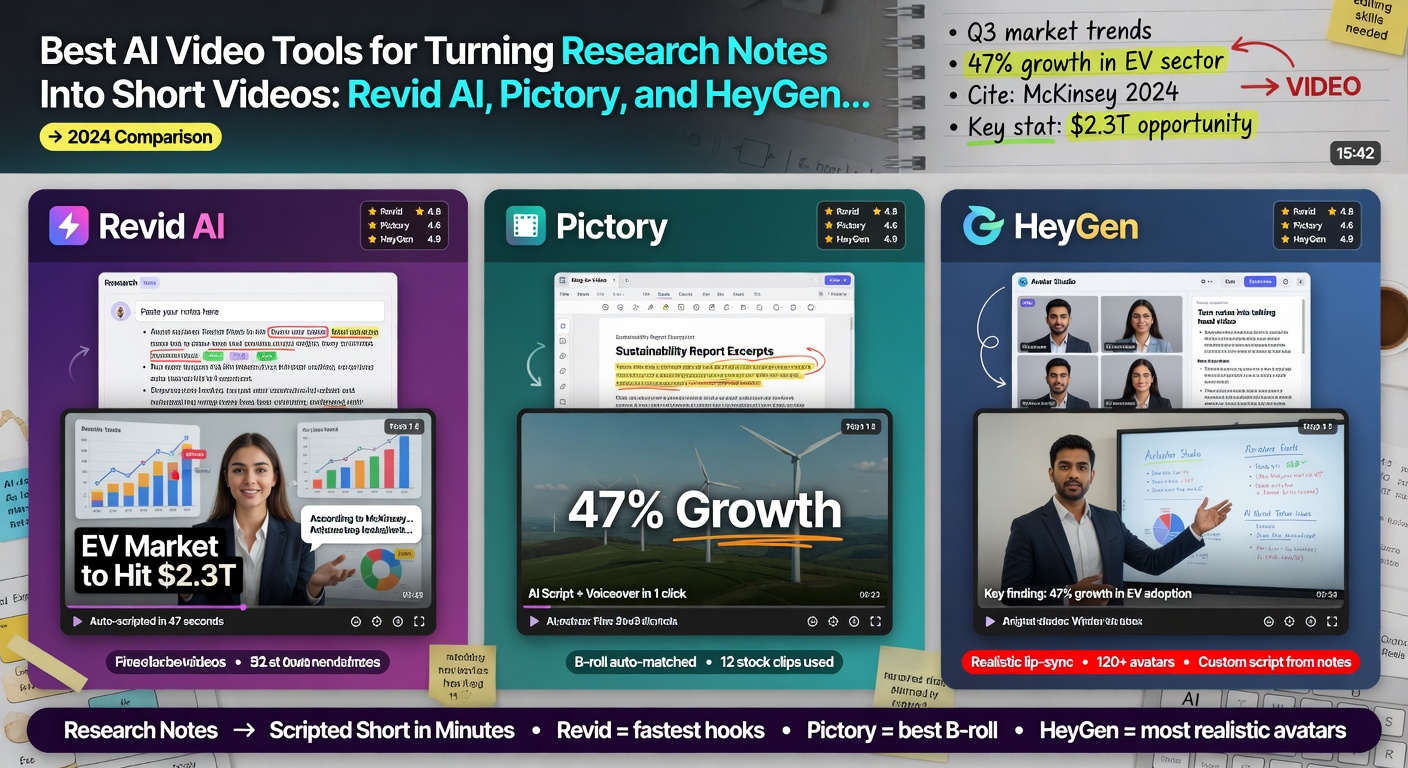
You've spent hours buried in research. Your notes are solid. Your insights are there. But turning them into a video that actually holds attention feels like learning a new skill you don't have time for. That friction point is where these tools step in.
Revid AI treats your notes like a first draft and handles the scaffolding. Feed it bullet points or rough paragraphs, and it auto-generates video sequences with matching visuals, text overlays, and pacing that mimics actual editing decisions. The output feels intentional, not like a text-to-speech robot reading your homework. It's useful for research summaries, market analysis recaps, or academic breakdowns where clarity trumps production value.
Pictory takes a different angle. Instead of interpreting your notes, it lets you write a script and then visualizes it. That means more control over narrative flow, but also more deliberate work. The payoff: videos that feel written, not auto-generated. Best for opinion pieces, case studies, or anything where your voice and argument matter more than speed.
HeyGen is the heavy hitter for personality-driven content. Its AI avatars look human enough that viewers stop noticing they're synthetic. If your research notes anchor a commentary or explainer where a face talking builds credibility, HeyGen scales that without hiring talent. The downside is cost and setup time.
The choice hinges on what you're optimizing for. Need fast output from raw notes? Revid. Want to write scripts with high visual polish? Pictory. Need a talking head who doesn't require coffee breaks? HeyGen.
All three kill the friction between thinking and publishing. Pick the one that matches your workflow, not the one with the most hype.