 ViewDAO
Hark Raises $700M at $6B Valuation for Advanced Personal AI Hark, launched by Figure AI CEO Brett Adcock in late 2025
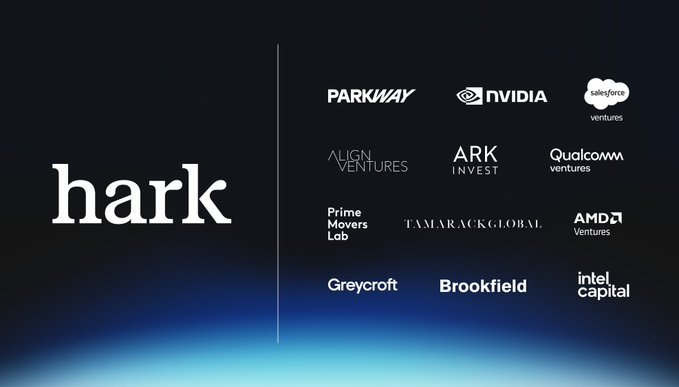
Brett Adcock is doing what Silicon Valley doesn't do anymore: building something real. While everyone else is playing with chatbots and selling snake oil, Hark just raised $700 million at a $6 billion valuation to make AI that actually does things. Parkway Venture Capital led the Series A round, with NVIDIA, AMD Ventures, and ARK Invest backing the play. For a company with no revenue and users on a waitlist, that's either genius or madness. Maybe both.
Adcock launched Hark in late 2025 after proving his chops at Figure AI, where he built robotics and hardware. This isn't another API wrapper. Hark is building multimodal AI models with custom silicon designed for natural conversation, computer vision, persistent memory, and real-world action. The company wants to replace the layer between your brain and the world. Every other AI startup is racing to match GPT's text outputs. Hark is racing to build something that remembers who you are, sees what you see, and acts on what you need. That's the difference between a tool and an assistant.
The funding structure tells you everything. Hark is spending the $700 million on three things: massive GPU clusters to train and run models at scale, tripling the engineering team from 60 to 200, and developing next-generation AI hardware devices. That's a hardware company that happens to need AI, not an AI company bolted onto hardware later. The distinction matters. You can't build a personal AI on rented infrastructure running someone else's chips. NVIDIA and AMD aren't investing because Hark is another LLM shop. They're investing because Hark will buy millions of dollars of compute and eventually ship custom silicon.
Memory is the real secret here. Current chatbots have no idea who you are after the conversation ends. Hark is architecting persistent memory into the foundation, which means your AI actually knows your preferences, your history, your context. It learns you over time instead of resetting every session. Vision gives it the ability to see the physical world, not just read text about it. Real-world actions mean it's not just reasoning inside a text window. It can integrate with systems, schedule things, move data, execute decisions. That's the gap between ChatGPT and an actual personal assistant.
The skepticism is fair. A $6 billion valuation for a pre-revenue company with users waiting for access is a bold bet. The AI market is crowded. Anthropic, OpenAI, and xAI have more capital, more data, and established user bases. Adcock has the hardware thesis, the capital, and the team. What he doesn't have yet is proof that people will pay for this or that the model works at the scale he's claiming. Waitlists look impressive on a pitch deck. Sustained user adoption and unit economics are what matter. The company will need to show that Hark is faster, smarter, and more useful than free alternatives. That's a high bar.
The real risk isn't the funding or the team. It's the timeline. Adcock is promising advanced multimodal models with real hardware inside two to three years. Scaling GPU clusters is a supply problem, not an engineering one. Hiring 140 more engineers fast means you're competing for talent with OpenAI, Anthropic, and Google. Custom silicon takes 18 to 24 months to design and manufacture. The schedule is brutal. If Hark misses key milestones or the models underperform, this valuation becomes indefensible fast. If the team executes, this could be the biggest AI company of the next decade.
What makes this different from the hype machine is Adcock's track record. Figure AI was never about pushing papers or farming grants. It was about building robots that could move boxes in warehouses. Hark is the same mentality: ship something people can use. The $700 million funds that ambition. Parkway, NVIDIA, AMD, and ARK aren't writing checks because they believe in the narrative. They're investing because they believe in the execution strategy. That's a meaningful signal in a market drowning in vaporware and press releases.
The market will know in 18 months if Hark's bet is real. Either the models outpace everything else by a massive margin, or they don't. Either custom hardware gives a meaningful advantage, or it's just a cost center. Either people actually want a persistent AI that remembers them and acts on their behalf, or they want a smarter search box. The $6 billion valuation is a wager that Adcock nails all three. In a market where most AI startups are solving yesterday's problem, that bet looks cheap.