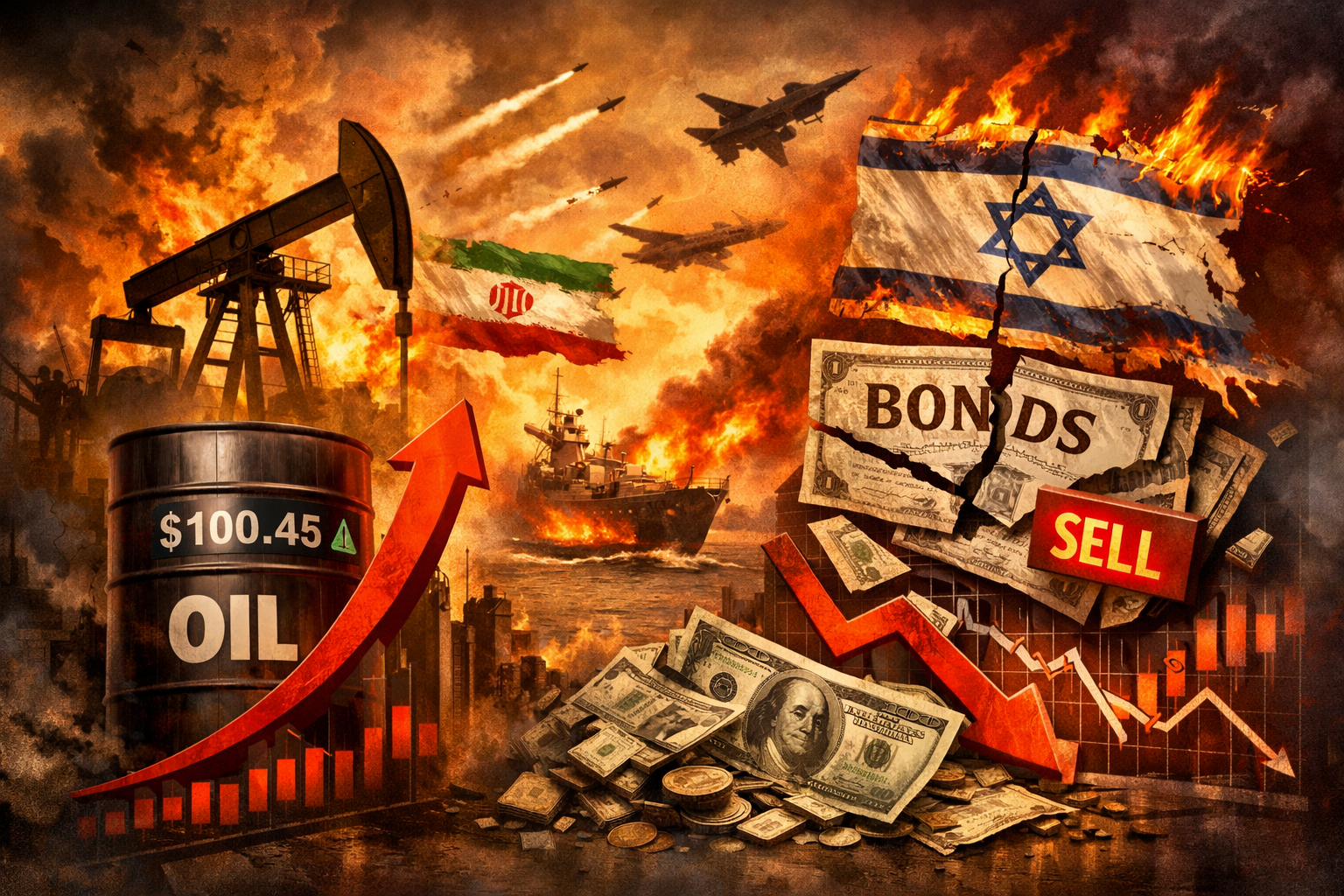
West Texas Intermediate crude hit $78 per barrel this week on escalating tensions between Israel and Iran. That's not a spike in isolation. It signals what markets actually fear: inflation creeping back into an economy that's supposed to be cooling. Bond yields jumped across the curve. The two-year yield, which tracks near-term rate expectations, climbed 15 basis points in two days. When oil spikes fast, traders price in higher energy costs downstream. Gas, shipping, plastics, chemicals. The entire supply chain gets more expensive, and central banks can't ignore it.
This matters because the Federal Reserve spent two years hiking rates to kill inflation. Progress was real. PCE inflation fell from 5.6% to 2.5% by late 2023. But oil-driven shocks are the Fed's hardest problem. They can't drill faster. They can't negotiate a ceasefire. All they can do is watch and decide whether the shock is temporary or structural. If Iran supplies drop meaningfully or Middle East conflict widens, sustained energy inflation looks different. That forces the Fed to keep rates higher for longer, crushing bond values and choking growth.
Markets are pricing asymmetric risk. Oil traders see geopolitical tail upside. Bond traders see the inflation tail. Equity traders are caught between the two. If the conflict stays contained and oil settles, stocks rally on lower rate expectations. If it spreads and inflation accelerates, equities fall while oil climbs. The correlation flip is violent.
Historically, war shocks fade or get priced in. Crude could spike to $85 or $90 and then stabilize once supply fears settle. But the timing is terrible. The Fed was supposed to cut rates in 2024. Inflation noise ruins that narrative. Every percentage point of oil-driven CPI acceleration justifies another 25 basis points of hold. For bond investors already locked in near 5% yields, that's a gift. For everyone else, it's a tax on growth.
The Iran-Israel dynamic is now a legitimate macro variable. Watch the Strait of Hormuz. Watch tanker spreads. Watch what OPEC+ signals. This isn't noise.
Source: https://www.theguardian.com/business/2026/may/18/oil-prices-rise-bonds-iran-war-peace-talks-inflation-trump-crude-gilts-starmer
Key Signals
Stat
$78
Crude hit this level this week amid escalating tensions between Israel and Iran.
Stat
15 basis points
The two-year yield, which tracks near-term rate expectations, climbed 15 basis points in two days.
Stat
5.6% to 2.5%
PCE inflation fell from 5.6% to 2.5% by late 2023 following the Federal Reserve's two-year rate hiking cycle.
Stat
~5%
Bond investors are locked in near 5% yields, which could be extended if oil-driven inflation accelerates.
Claim
Oil-driven shocks are the Federal Reserve's hardest problem because they cannot control oil supply or geopolitical outcomes, only assess whether the shock is temporary or structural.
Claim
If Middle East conflict widens or Iran supplies drop meaningfully, sustained energy inflation would force the Fed to keep rates higher for longer, crushing bond values and choking growth.
Claim
Markets are pricing asymmetric risk with oil traders seeing geopolitical upside, bond traders seeing inflation risk, and equity traders caught between the two scenarios.
Claim
The timing of potential oil-driven inflation is particularly damaging because the Fed was supposed to cut rates in 2024, but inflation noise could derail that narrative.
FAQ
Why did oil prices jump on Iran-Israel tensions?
Iran is a major oil producer. Military conflict or supply disruptions in the Persian Gulf region directly threaten crude output, creating immediate supply-shock risk that traders price into futures immediately.
How do oil spikes impact inflation?
Rising crude prices cascade through the economy: gasoline, shipping, plastics, chemicals, and fertilizers all get more expensive. This pushes consumer inflation higher unless demand collapses, forcing central banks to hold rates higher to combat price pressures.
What does this mean for Federal Reserve policy?
The Fed was expected to cut rates in 2024 as inflation cooled. Oil-driven inflation noise undermines that thesis. Higher oil prices justify the Fed keeping rates elevated longer, which crushes bond prices and pressures equity valuations.
Why are bond yields rising if investors are scared?
Bond prices fall (yields rise) because inflation erodes bond returns. Investors demand higher yields to compensate for inflation risk. A 2-year yield jump reflects market expectation that the Fed will hold rates higher for longer due to energy-driven price pressures.
 ViewDAO