 ViewDAO
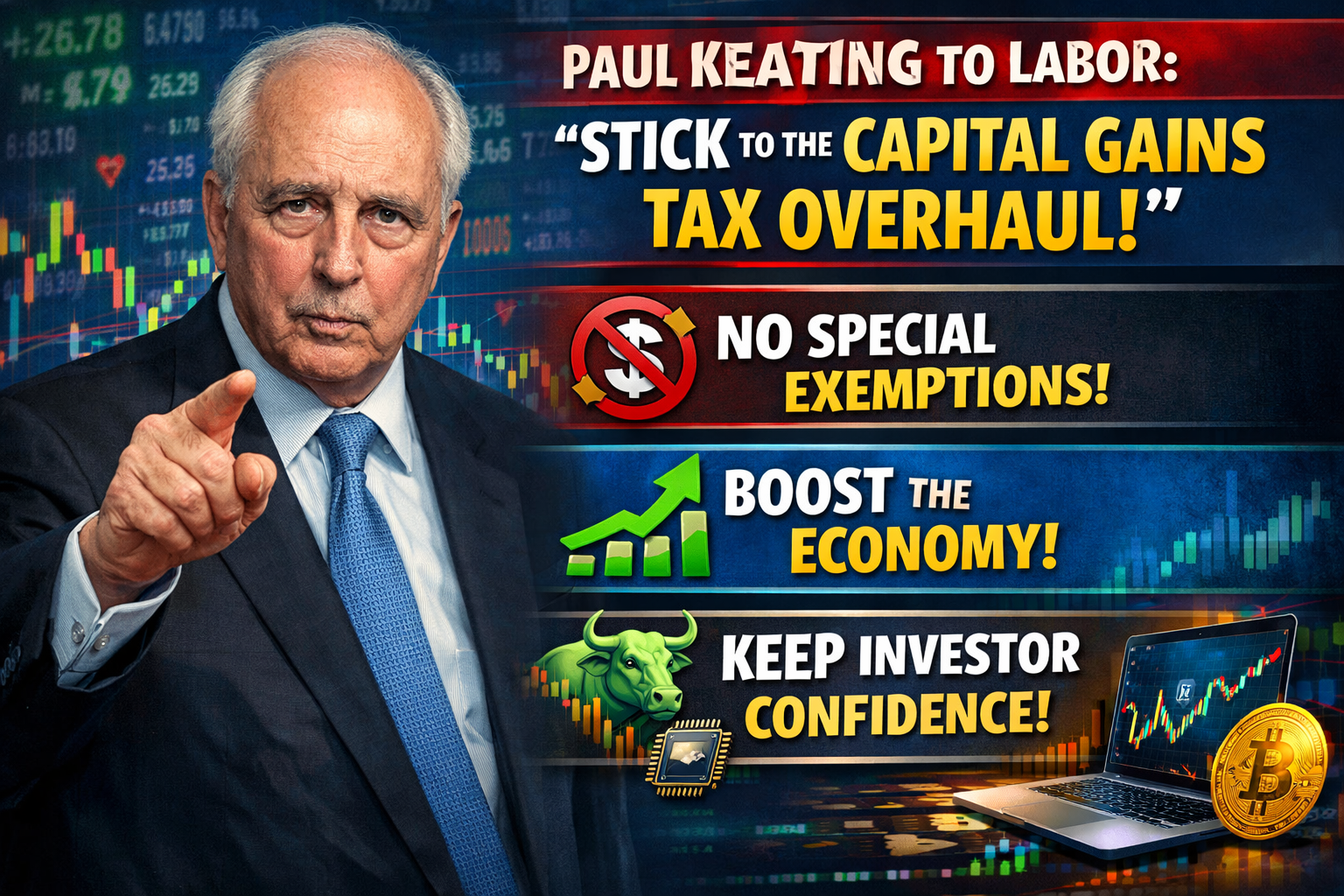
Paul Keating urges Labor to stick with capital gains tax overhaul and avoid exemptions that would hurt economy
Keating knows exactly what he's talking about. The man who modernized Australia's tax system in the 1980s is warning his own party that carving out exemptions to the proposed capital gains tax changes would gut the reform's economic benefit. He's telling them to hold the line.
The proposed overhaul targets the 50% capital gains discount for assets held longer than 12 months. Labor wants to cut it to 25%. That would raise around $60 billion over a decade. But the pressure is building from property investors, farming groups, and small business lobbies who want their piece of the pie kept whole.
Keating's argument is straightforward. Exemptions create complexity, loopholes, and lobbying opportunities that erode the tax base. They also create winners and losers based on political power, not economic merit. Australia has a long history of tax reform getting hollowed out by carveouts. The GST started with a broad base. Now it has multiple exemptions. The result is a less efficient tax that collects less revenue.
Labor faces a political problem. The party needs to win back seats in regional and outer-suburban areas where property investors and small business owners are key voters. Offering exemptions could win votes but undermine the fiscal rationale for the reform. It's a short-term electoral gain traded for a long-term structural improvement.
Keating's intervention matters because he has credibility on this issue. He was the treasurer who introduced the original capital gains tax in 1985 and the discount in 1999. He knows how these changes play out over decades. He also has no skin in the current political game. He's not running for office. He's offering advice based on experience, not ambition.
The opposition has already labeled the proposed changes a retirement tax and a property tax. That framing is sticking with older voters and homeowners. Labor needs a counter-narrative that explains why the current discount disproportionately benefits wealthy investors over first-home buyers and younger workers trying to save a deposit.
If Labor blinks and starts handing out exemptions, the reform will collapse under its own weight. Every industry group will demand equal treatment. The tax base will narrow. The revenue estimates will shrink. The Treasury will be left with a messy compromise that satisfies no one. Keating knows that outcome. He has seen it happen before with the mining tax and the carbon price.
Labor's choice is simple. Adopt Keating's advice and pass a clean reform that fights bracket creep and funds services. Or cave to pressure and pass a weak version that pleases no one and delivers little. The party has spent years talking about tax reform. Now it has to decide whether it actually means it.