 ViewDAO
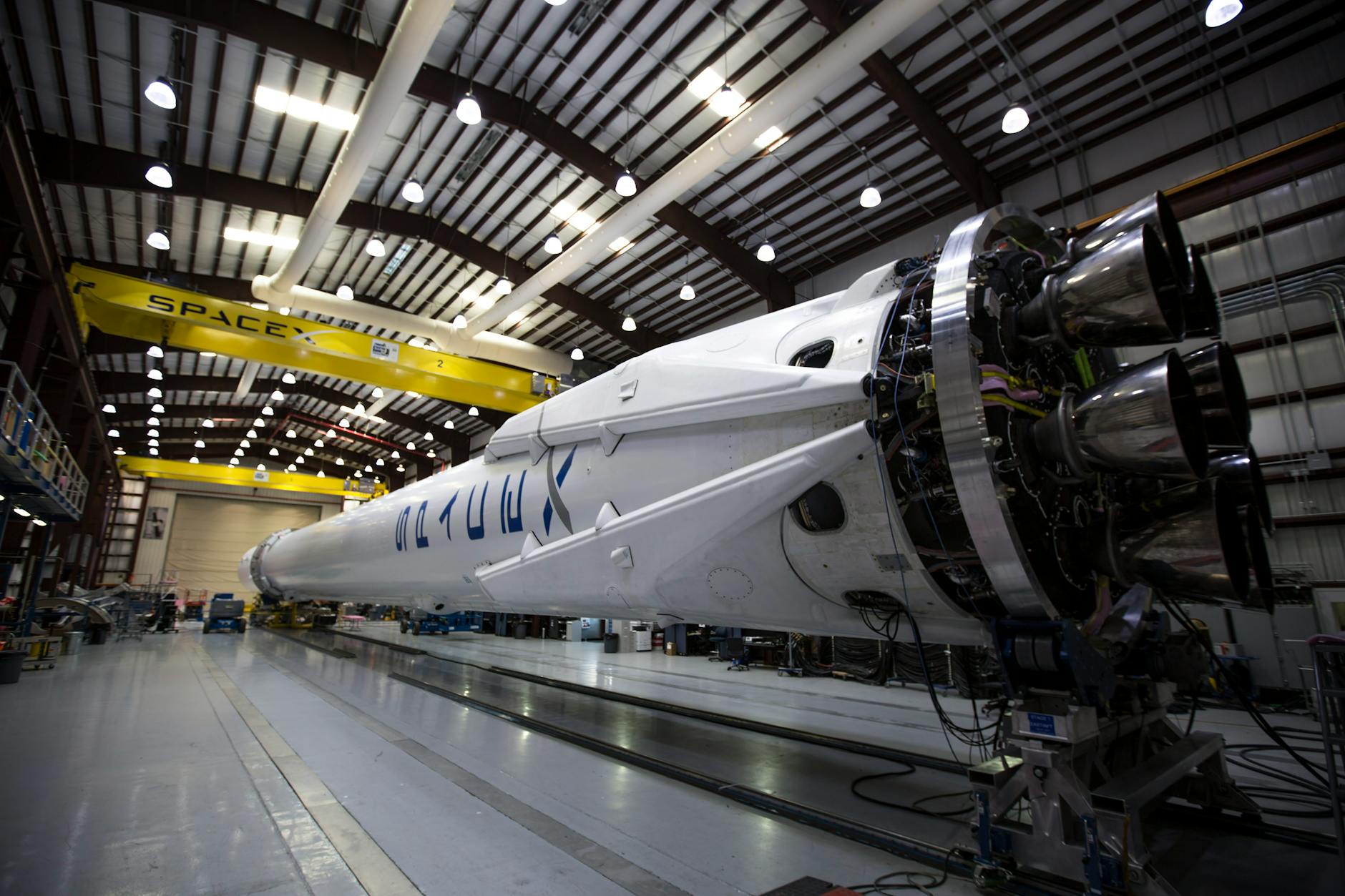
Elon Musk's rocket company is moving toward what could be the largest IPO of the decade. SpaceX has filed preliminary paperwork with the SEC, selected Nasdaq as its listing exchange, and set June 11 as the target date for pricing its initial public offering. This isn't speculation or rumor. The company has committed to this timeline in official regulatory filings, and the choice of Nasdaq over NYSE signals confidence in a tech-forward market that values growth over traditional valuation metrics.
What makes this moment historically significant is the sheer scale. SpaceX is expected to raise between $15 billion and $25 billion depending on final pricing, which would make it one of the top five IPOs in U.S. history by proceeds. For context, Alibaba's 2014 debut raised $25 billion, and Saudi Aramco's 2019 listing brought in $29.4 billion. SpaceX's valuation is currently estimated between $210 billion and $250 billion in private markets, meaning the public market will finally attach real price discovery to a company that has completely reshaped commercial spaceflight. The company operates Starlink, the global satellite internet constellation with over 7 million active subscribers, and Starship, the next-generation launch system designed for Mars missions and deep space cargo.
Nasdaq's selection reveals strategic thinking about market positioning. SpaceX could have chosen NYSE, which traditionally lists large industrial companies and would have positioned the rocket firm alongside Boeing and other aerospace contractors. Instead, Nasdaq caters to companies with volatile growth narratives, technological moats, and investor bases that value recurring revenue and scale potential over dividend stability. SpaceX's Starlink business generates recurring subscription revenue. Starship launches open entirely new markets. The company is executing on contracts worth tens of billions from the Department of Defense, NASA, and commercial satellite operators. A Nasdaq listing attracts capital from technology and growth investors who understand venture-scale economics and aren't spooked by high burn rates or long time horizons to profitability.
The June 11 pricing date is not arbitrary. It allows for a roadshow period, analyst briefings, and the customary pre-launch marketing sprint that investment banks conduct to gauge demand. If the market environment deteriorates between now and then, SpaceX can postpone. But the company has made the choice to go public during a specific window, suggesting management and board confidence in near-term conditions. Geopolitical tensions around semiconductors and defense spending have made space capabilities a national priority. The Federal Reserve appears to be holding rates steady for the foreseeable future. Tech stocks have rebounded from 2024 lows. These tailwinds create a favorable backdrop for a company whose fundamental business rests on government contracts and commercial expansion.
Investors should expect a flood of analysis once the S-1 registration statement becomes public. Analysts will model Starlink subscriber growth, calculate the marginal profitability of each launch, value the government contract pipeline, and attempt to separate the business value of SpaceX from the celebrity of Elon Musk. This last point matters. SpaceX succeeds because it has built institutional competence: a supply chain for Raptor engines, vertical integration of avionics and structures, and a launch cadence that no competitor can match. These are defensible competitive advantages independent of any one person. But Musk's public persona and his simultaneous leadership of Tesla and X introduces execution risk and perception risk that will weigh on the valuation multiple.
The mechanics of the IPO will reveal how seriously the underwriters (likely Goldman Sachs, Morgan Stanley, and Bank of America, though this has not been officially announced) believe in the long-term value story. If demand is 10 times oversubscribed and the stock prices at the high end of the proposed range, it suggests institutional investors see SpaceX as undervalued relative to peers or relative to the cash flows from Starlink and commercial launches. If demand is tepid and the IPO prices at the low end of range, it shows concern about valuation, about Musk's distraction, or about concentration risk in government contracts. The market pricing will not be truth. It will be a live bet on SpaceX's ability to execute Starship's full reusability, maintain its launch monopoly in the U.S., and grow Starlink to profitability without competing away margins.
For SpaceX employees, June 11 represents liquidity and a valuation event. For early investors like Founders Fund and Sequoia, it represents proof of concept on a 20-year thesis. For Musk, it removes pressure to raise capital and gives him currency to deploy at Tesla or X. For the aerospace industry, it sets a public market precedent: space companies are worth venture multiples, not legacy industrial multiples. This redefinition of value in the sector will reshape capital allocation across Blue Origin, Axiom Space, Relativity, and every other private space firm seeking funding. A successful SpaceX IPO doesn't just create shareholder value. It signals that space is no longer a government monopoly or a billionaire hobby. It's an infrastructure layer of the global economy now.