 ViewDAO
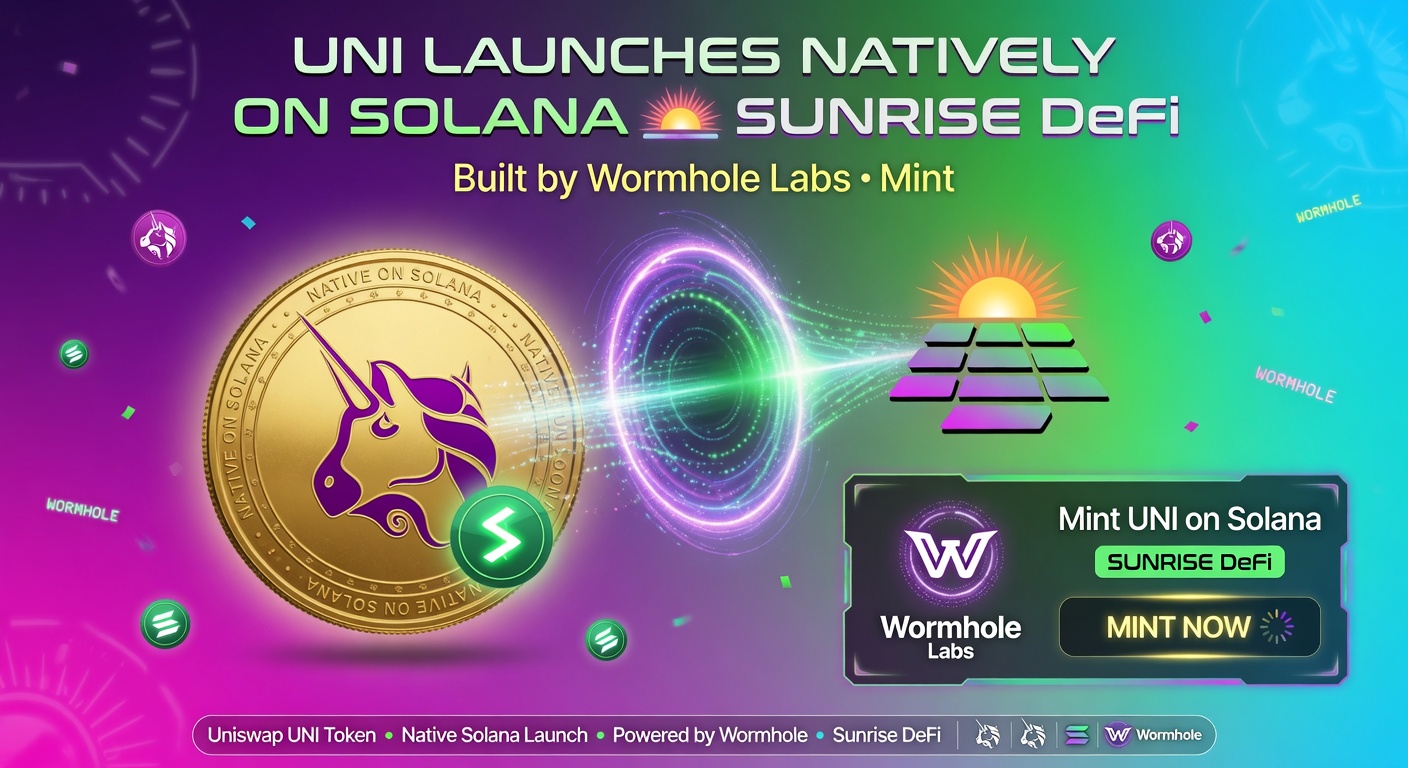
Uniswap's UNI Token Launches Natively on Solana
Everyone sees this as Solana winning another point against Ethereum. UNI went native on Solana via Sunrise DeFi's Native Token Transfers framework, skipping the wrapped-token mess that plagued previous cross-chain launches. Traders can swap it fee-free on Jupiter and Kamino. TAO and AVAX already proved the model works. The narrative writes itself: Solana's speed and liquidity are pulling blue-chip assets away from Ethereum's gravitational pull.
That's backwards. This launch signals Uniswap's strategic retreat, not Solana's ascendance.
Uniswap's governance token exists to defend Ethereum L1 economic moat. Spreading UNI across chains dilutes that purpose. Yes, native mints are cleaner than wrapped tokens. But native mints also mean UNI holders on Solana have no incentive to bridge back to Ethereum where Uniswap protocol fees accumulate and governance power concentrates. Wormhole Labs benefits. Jupiter's volumes benefit. UNI holders on Solana get fee-free swaps. Uniswap Foundation loses control over where its own token lives and breathes.
Look at the mechanics. Native Token Transfers frameworks, built by Wormhole, give Solana users direct UNI without wrapping friction. That sounds clean. It's actually radical fragmentation. When you mint UNI natively on Solana, you're creating a parallel currency under different custody assumptions. Solana validators secure it. Wormhole's protocol bridges it. Ethereum validators have zero say. This is the opposite of network effect consolidation.
Sunrise's track record matters here. TAO, the Anthropic-backed token, launched natively. AVAX followed. Both saw early volume spikes on Jupiter. None of them reversed course. None of them minted back to their origin chains in volume. The pattern is one-way: launch native, stay native, abandon the origin chain's ecosystem economics.
For Uniswap, the play looks rational in the short term. More venues for UNI trading. More TVL capture from Solana DeFi. But it erodes Ethereum's claim on Uniswap's governance. If UNI supply fragments across five chains, each with native custody and native trading, then UNI on Ethereum becomes just another flavor of the token, not the canonical version. Governance becomes a hostage negotiation between chain communities instead of a coherent economic system.
The real contrarian take: Solana isn't winning because it's fast. Solana is winning because Ethereum's blue-chip assets are willing to fork themselves across chains. Uniswap's decision to mint natively on Solana is Uniswap admitting Ethereum's economic flywheel isn't strong enough to keep its own token on-chain.
For ViewDAO readers, watch which chains get native mints next. Every new native launch is a vote of no-confidence in Ethereum's ability to capture the economic value of cross-chain protocols. That's the real story buried under the Solana hype.